
How to Become a Chief Data Officer: What Fourteen Thousand Searches a Month Still Can't Find

Fourteen Thousand Searches. Almost No Answer From Someone Who's Coached a CDO Into the Role.
Data & AI Leadership · October 2026 · Chief Data Officer
If you've been "not quite ready" for the CDO seat for two review cycles — the gap is almost never the one you think it is.

Fourteen thousand people a month search for how to become a chief data officer. Almost none of the answers they find come from someone who has coached one into the role. The search behind that number is not idle curiosity. It is a mid-career data or AI leader trying to work out whether the next five years point toward the C-suite or away from it. The answers currently ranking for the term read like job postings and credential checklists. That is the gap this piece is built to close — not with a resume template, but with the three things a chief data officer actually has to prove before a board offers the seat.
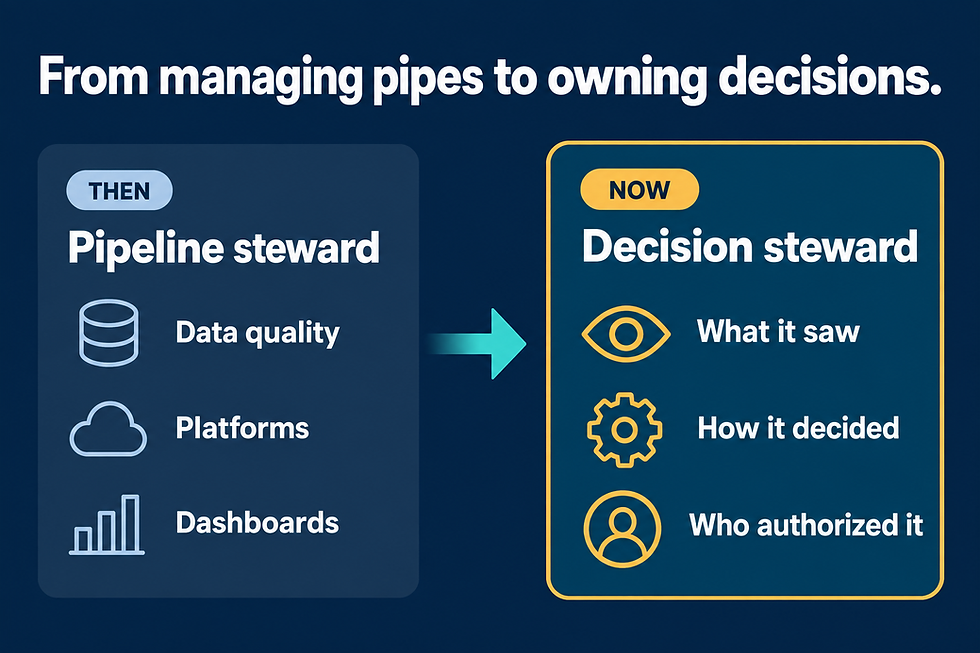
The chief data officer role has changed more in the last three years than in the previous ten. The job used to be about the data — getting it clean, governed, accessible, and reliable. The job now is about the decisions the data gets used to make, the AI the data is feeding, and the accountability for what those systems do when nobody is watching. The candidates still writing resumes for the old role are quietly being passed over for candidates writing their next twelve months around the new one.
What the Search Behind 'Chief Data Officer' Is Actually Asking
When someone types that search into Google, they are rarely asking for a definition. They are asking some version of three questions nobody has written down for them: What do I need to be able to show that I cannot show today? Which of my current responsibilities will not transfer, and which will? And — the quietest one — am I actually the kind of leader a board picks, or am I going to spend five more years being the smartest person in the room nobody promotes? Every piece of advice worth giving on becoming a chief data officer answers at least one of those three questions.
The Three Things That Separate Chief Data Officer Candidates From Chief Data Officer Hires
Across the leaders I've watched make this transition — and the ones who stalled — three capabilities separate the people who get the chief data officer offer from the people who keep getting "you're not quite ready":
A translation habit. The ability to walk into a C-suite meeting and reframe a technical constraint as a business decision in one sentence, without the audience noticing you did it. This is a learned skill, not a personality trait.
A decision portfolio. A written record of five to ten decisions you influenced — not projects you delivered — where the business outcome is traceable to your judgment. Most senior data and AI leaders have the projects. Almost none have the decision portfolio.
An accountability posture. The board is not looking for someone who will build better models. They are looking for someone who will own what the models decide once they are in production. The candidates who get the seat are the ones who have already started acting as if they own that outcome, before anyone handed them the title.
The context on how the chief data officer role has structurally shifted — including the thirty-six hires in thirty days signal — is covered in The Chief Data Officer Is No Longer the Person Who Manages the Pipes. The CAIO companion piece on scope and authority is in The New CAIO Mandate. Both are useful background for the twelve-month plan below.
The Chief Data Officer Mandate No Job Description Tells You About
Every chief data officer job description names roughly the same accountabilities: strategy, governance, platform, team, outcomes. What they do not name — and what the board actually weights the hire on — is the quieter mandate underneath. The modern chief data officer is being hired to carry three things:
The trust capital between the business, the board, the regulator, and the customer, when AI is making decisions none of them can audit the way they used to. The judgment infrastructure that decides which decisions get automated, which stay with humans, and which require review before shipping. The accountability lineage — a defensible, continuous record of what the AI did, under whose authority, and what evidence exists to show it. None of these show up in a candidate's resume. All of them show up in the thirty-minute conversation a board has about whether to make the offer.
What to Do in the Next Twelve Months If This Is Your Chief Data Officer Path
Three practices separate the leaders who make this move in twelve months from the ones who are still trying three years from now:
Start writing the decision portfolio this quarter. For every meaningful decision you influence over the next ninety days, keep a one-page record: the decision, the alternatives, your recommendation, what was decided, and what happened. By month twelve you will have the only kind of document a board actually reads carefully — a track record of judgment, not activity.
Build the translation habit on purpose. Pick one business leader outside data or AI and have a monthly thirty-minute conversation where you translate one technical topic into the business consequence they care about. Not a tutorial. A translation. Twelve of those a year compound into the skill boards buy.
Take ownership of one decision that is "not yours" today. One business outcome where AI is involved and no one has explicitly named who owns the result. Volunteer. The accountability posture is practiced before it is titled.
A Question Worth Sitting With Before the Next Board Meeting
Before your next review with the leaders deciding who makes the next move:
Which of the three capabilities above is weakest in my current practice — translation, decision portfolio, or accountability posture — and what will I do about it this quarter?
If a board member asked me today to name one AI decision I own the outcome of, not just the delivery of, could I answer with a specific example?
Am I writing my next twelve months around the chief data officer role I want, or around the senior-manager role I'm already in?
The chief data officer path is coachable. The three capabilities above are built on purpose, in a time frame most leaders overestimate the length of. If you'd value a candid, one-on-one conversation about where your own path to the chief data officer seat actually stands today — and what the next ninety days would look like if the goal were real — book a strategy call. The hire is still largely won in private, by the leaders who prepared before the search opened. 🌊
Stay tuned for the next blog, and subscribe to the blog and our newsletter to receive the latest insights directly in your inbox. Together, let's make 2026 a year of innovation and success for your organization.
>> Discover the path to achieve sustainable growth with AI and navigate the challenges with confidence through our Data Science & AI Leadership Winning Blueprint that's tailored to help you craft a compelling data and AI vision and optimize your strategy—it's your key to success in the journey of Generative AI. Reach out for a complimentary orientation on the program and embark on a transformative path to excellence.

May you grow to your fullest in your data science & AI!
Subscribe Grow to Your Fullest and
Get Your FREE data & AI Leadership Blueprint, or
Book a FREE strategy call with us
Learn more Data & AI strategy consulting framework


Comments