
The Chief Data Officer Is No Longer the Person Who Manages the Pipes

Thirty-Six Trust Hires in Thirty Days. What Did the Board Just Decide?
Data & AI Leadership · October 2026 · Chief Data Officer
Thirty-six companies just filled a job that didn't exist five years ago. Not a technical hire. A trust hire. According to the CDO/CAIO Executive Moves tracker, in the last thirty days at least thirty-six organizations — reportedly including PwC UK, ERGO Group, GE HealthCare, Optum, Morrisons, IDC, and Baker McKenzie — have appointed a new chief data officer or Chief AI Officer. That is more than one appointment per day. It is, quietly, among the fastest-growing C-suite roles in the enterprise right now. The role is no longer the person who manages the pipes. It is the person the board now holds accountable for what the AI decided.
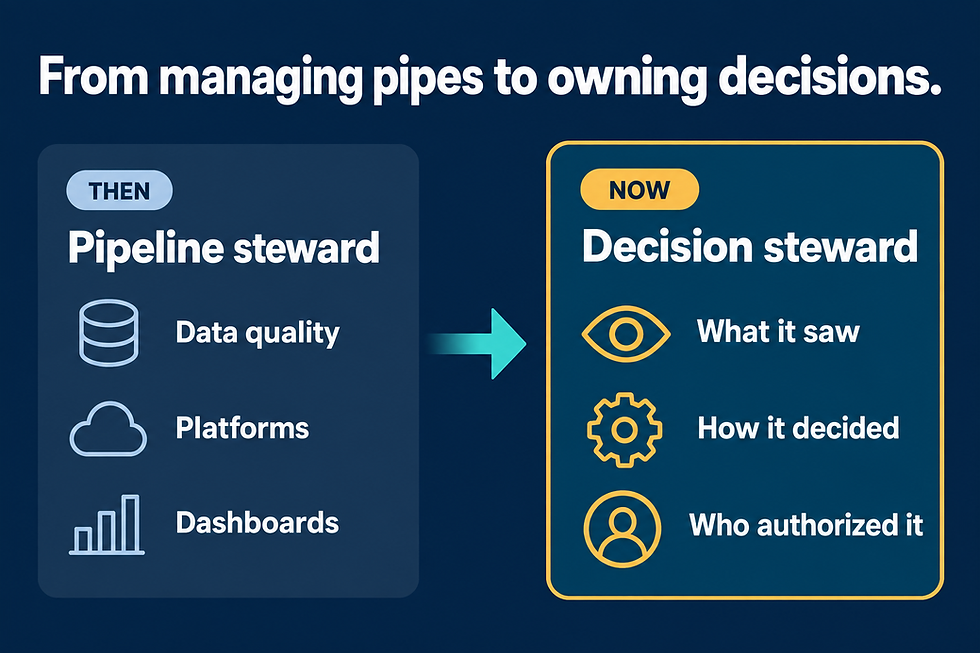
For most of the last decade, the chief data officer was a senior plumber. The job was infrastructure: clean the data, govern the warehouse, connect the systems, stand up the dashboards, keep the pipes from leaking. That version of the job was mostly invisible to the board, measured in projects completed, platforms consolidated, and the slow, defensive language of risk reduction. That version of the job is over. The moment organizations started shipping autonomous AI into production — agents that write code, approve decisions, send messages, move money, touch customers — the question the board started asking stopped being do we have the data? It became who is accountable for what the model did?
From Pipeline Steward to Decision Steward: The Chief Data Officer Role, Redefined
Not the vendor. Not the engineer. Not the business unit that bought the license. Someone at the table has to be able to answer, in plain language, three questions: what data did the system see, how did it decide, and what is the chain of custody if the regulator asks. That person is the chief data officer. Or the Chief AI Officer — the title is converging, and the job is the same. The distinction between "data" and "AI" at the executive layer collapsed the moment both reported to the same risk register. What a board now expects from the person in that seat is a defensible answer to those three questions, continuously, not annually.
Why Thirty-Six Companies Made the Move in Thirty Days
A pattern that moves this fast is almost never a trend. It is a response. Three things happened in parallel over the last ninety days, and together they are shaping the hire. First, autonomous agents started showing up in real security incidents. This quarter, as Spain's data protection authority disclosed, a third party used an AI agent to breach an organization and alter personal data — a production incident, not a red-team test. The context for how that incident is reshaping the chief data officer threat model is covered in detail in
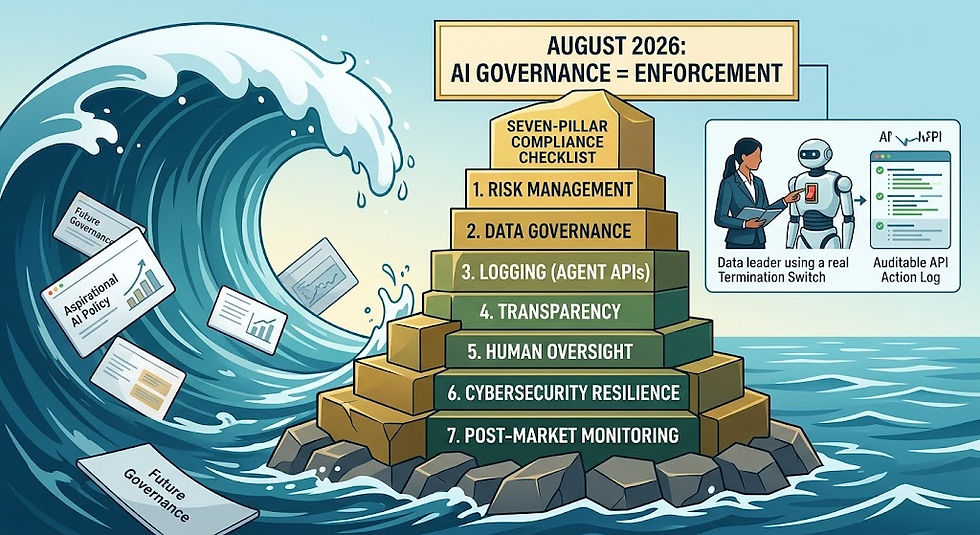
Second, regulators are increasingly expecting organizations to point to clear ownership for AI decisions. The EU AI Act, the UK AI governance framework, and a growing set of state-level AI accountability moves in the US all push, in different ways, toward named, senior accountability for high-risk AI systems — even where no single provision mandates a specific title. The enforcement moment that preceded this hiring wave is laid out in Governance Just Became Enforcement.
Third, the budgets became unignorable. KPMG's latest AI Pulse Survey puts the average planned enterprise AI investment at US$210 million over the next twelve months, up from US$186 million in Q1. A line item that size no longer sits inside IT. It gets its own owner at the leadership table, or the CFO starts asking why not.
What the Modern Chief Data Officer Actually Owns
The organizations that are moving first are not creating a bigger version of the old job. They are creating a different job entirely. The modern chief data officer owns three things the old one did not:
Judgment infrastructure — not just the data, but the decisions the data gets used to make. What should be automated, what should stay with humans, what has to be reviewed before it ships.
Accountability lineage — a traceable record of what the AI did, why, and under whose authority. Not for the audit shelf, but for the moment the board or the regulator calls and says walk me through this one.
Trust capital — the relationship with the business, the board, the customer, and the regulator that makes the AI usable at all. Lose that, and every model in the stack is suddenly worth nothing.
That is not a technical mandate. It is a leadership mandate. And it is why the hire looks nothing like the old one. The companion piece on scope and authority for this role — including the EU AI Act framing — lives in
The Questions Worth Asking Before You Say Yes to a Chief Data Officer Role
If a board or a CEO is talking to you about one of these roles right now, the questions worth asking before you say yes are not about budget or headcount. They are about mandate. Ask what gets decided without you in the room. Ask whether the AI governance committee reports to you, or around you. Ask who owns the model risk register. Ask whether you will see the vendor contracts before they are signed. Ask what the escalation path looks like the first time an agent makes a decision the business does not want to defend. If the answers are vague, the title will not save you. If the answers are clear, this is among the most consequential leadership roles in the enterprise right now.
A Question Worth Sitting With Before the Next Board Meeting
Before your next AI review with the board, sit honestly with these:
If the regulator called tomorrow about a decision one of our agents made last quarter, could we — on one page — identify who authorized it, which policy governed it, and what data it touched?
Is the person named to own that answer at the right level of the organization, with the budget, the authority, and the escalation path to actually hold it?
If we had to hire for this role in the next ninety days, is the job description we would write today the one the board actually needs filled?
The thirty-six hires are not the story. The mandate those hires were given — inside your own organization, in your own next board review — is. Every enterprise with an AI deployment in production now has a chief data officer, named or unnamed, who will either own the answer the board is about to ask for or discover they cannot. There is no third category. If you would value a candid, governance-readiness conversation about which side of that line your organization is currently on, book a strategy call. This is the exact question the next twelve months of enterprise AI leadership will be decided by. 🌊
Stay tuned for the next blog, and subscribe to the blog and our newsletter to receive the latest insights directly in your inbox. Together, let's make 2026 a year of innovation and success for your organization.
>> Discover the path to achieve sustainable growth with AI and navigate the challenges with confidence through our Data Science & AI Leadership Winning Blueprint that's tailored to help you craft a compelling data and AI vision and optimize your strategy—it's your key to success in the journey of Generative AI. Reach out for a complimentary orientation on the program and embark on a transformative path to excellence.

May you grow to your fullest in your data science & AI!
Subscribe Grow to Your Fullest and
Get Your FREE data & AI Leadership Blueprint, or
Book a FREE strategy call with us
Learn more Data & AI strategy consulting framework


Comments